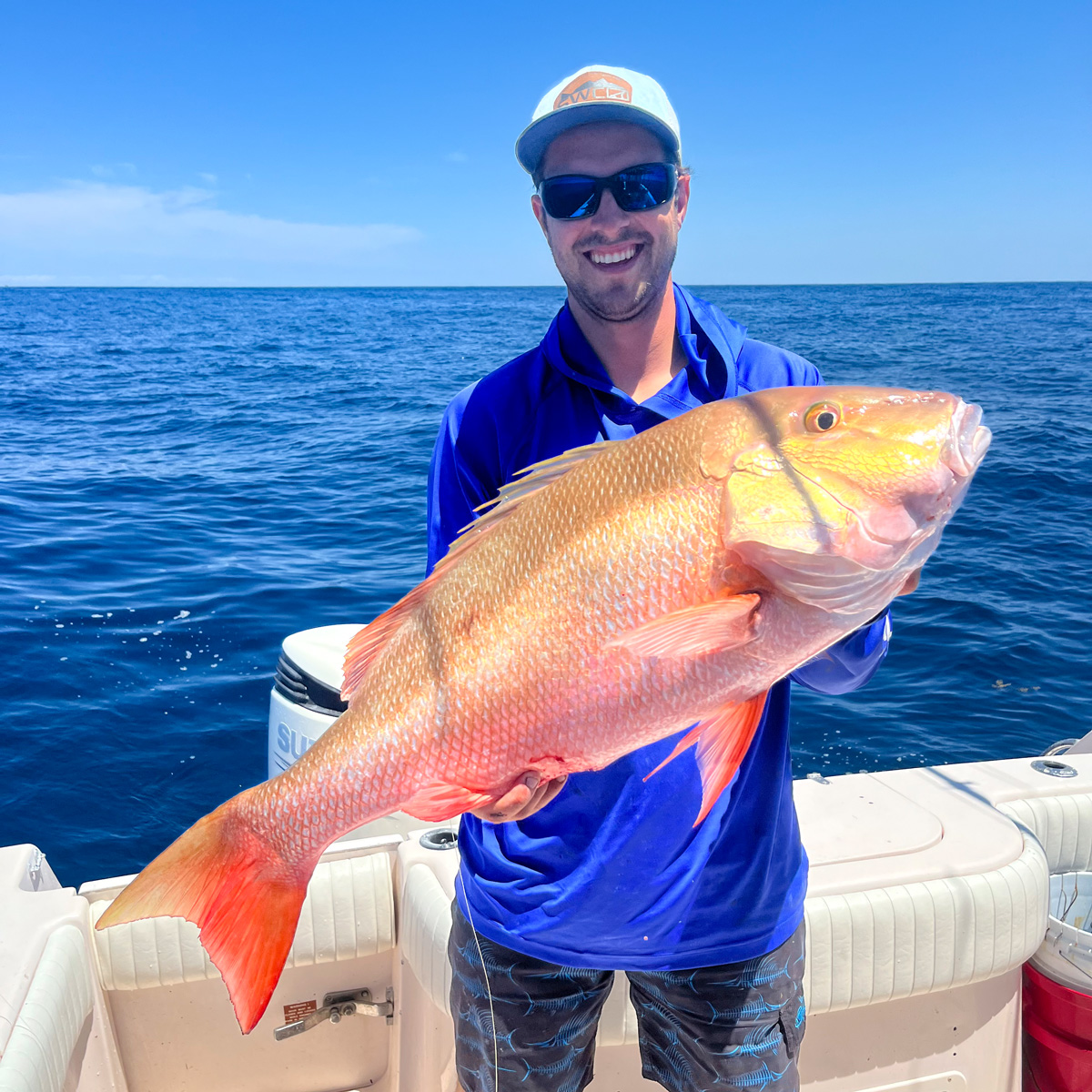
Mutton Snapper, aka Lutjanus analis, is my favorite fish to catch. In this post, we will dive into all aspects of how to catch them. Everything from tackle, baits, location, and how to fight them. So let’s get into it.
Physical Description:
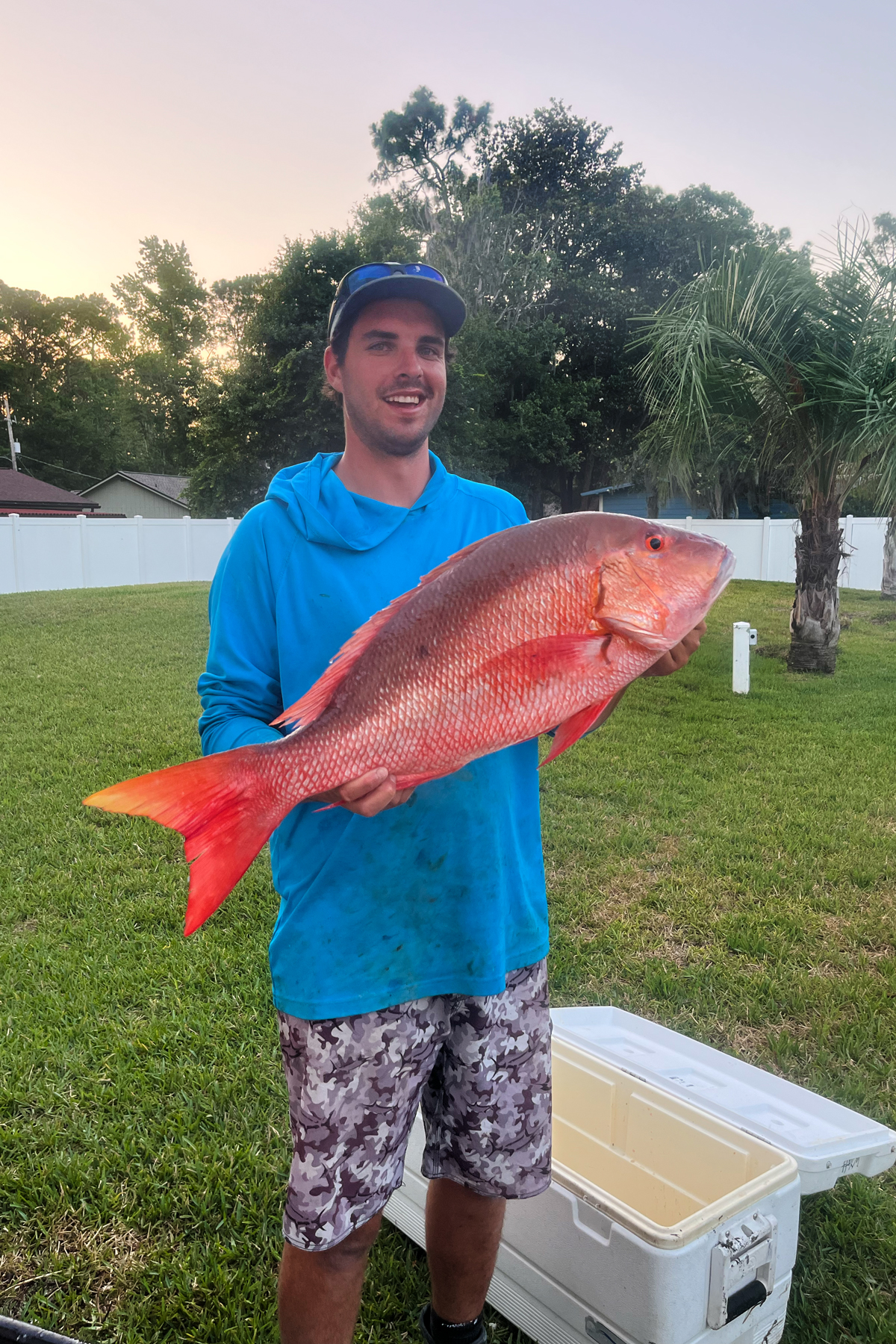
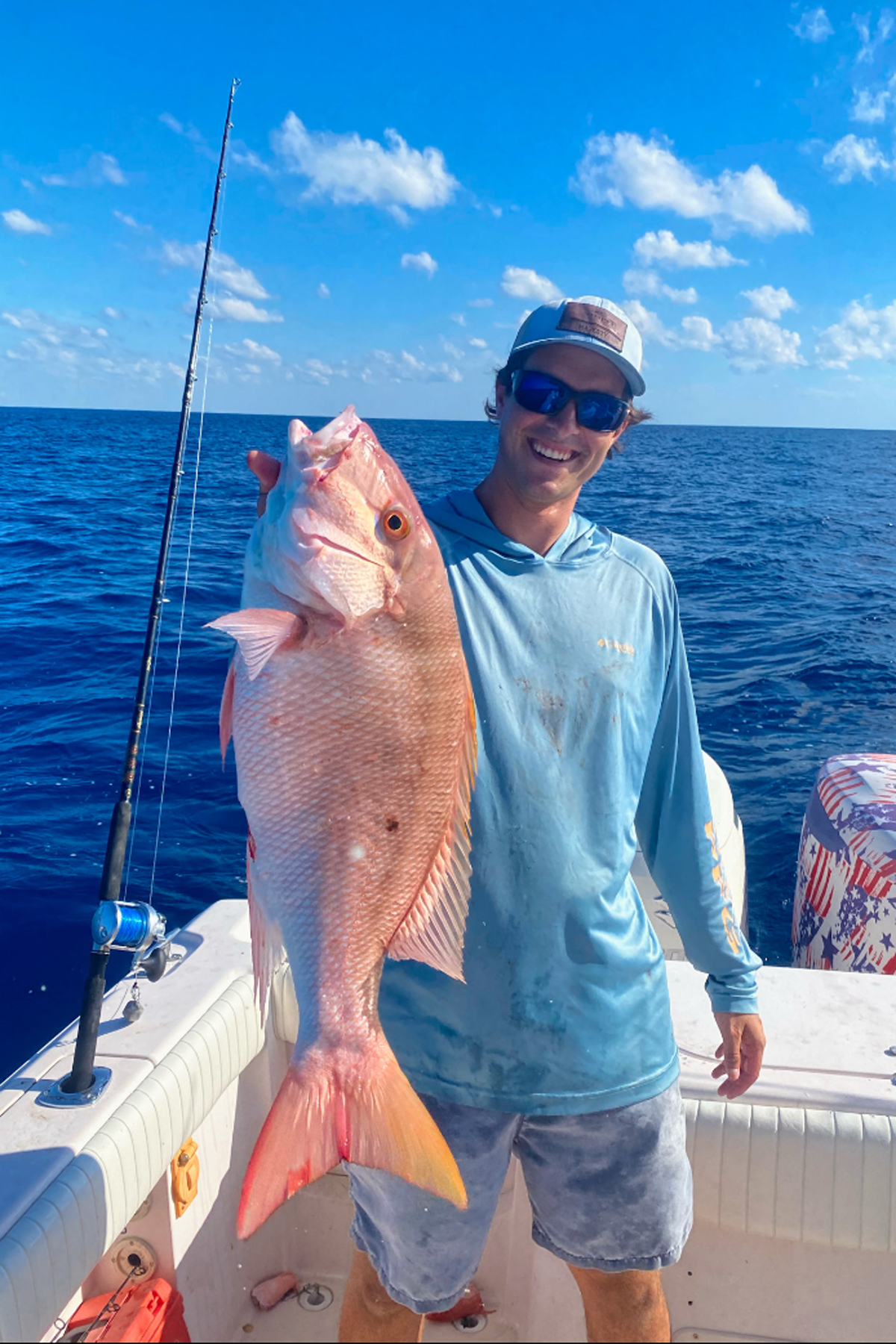
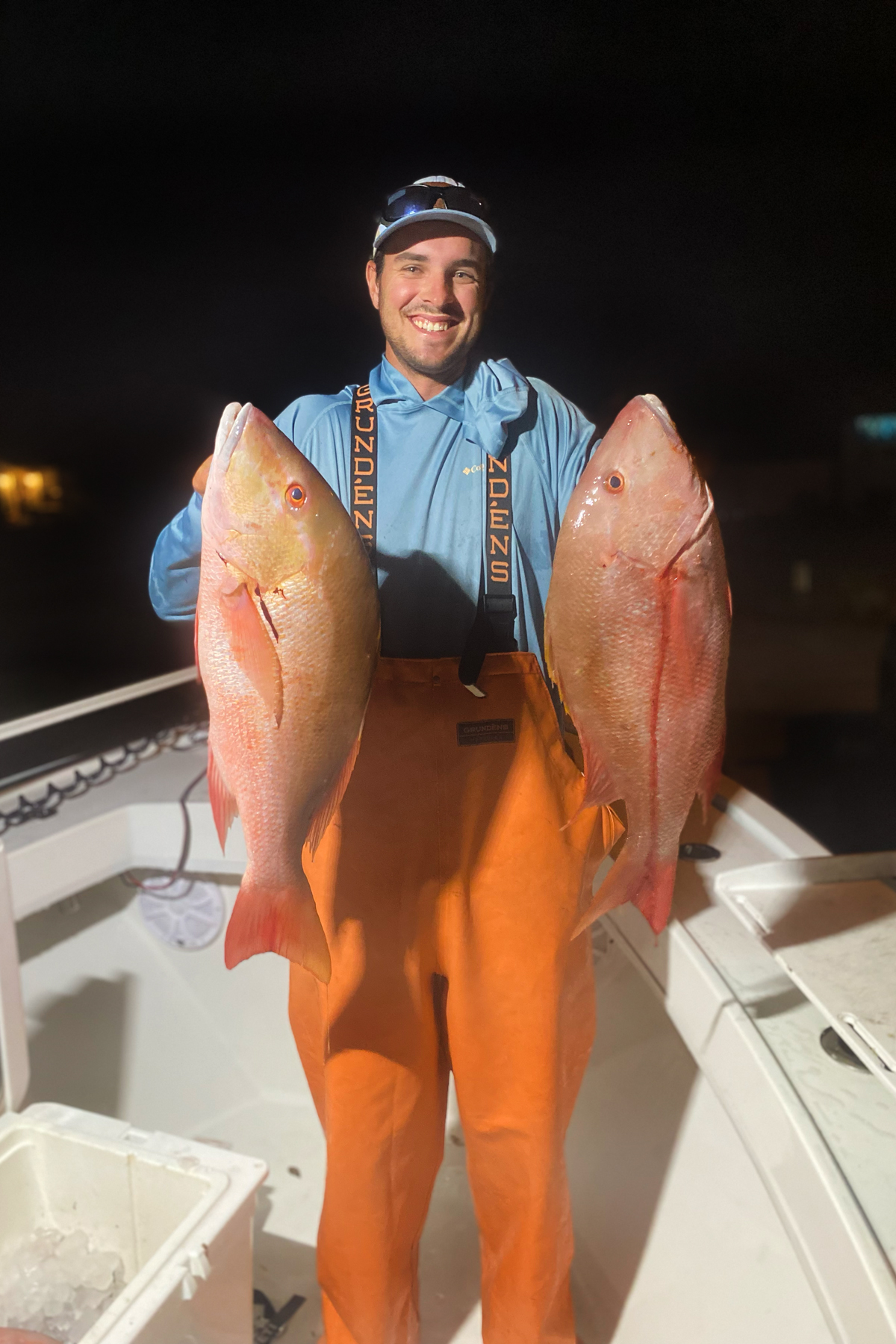
- Coloration: Adults are typically a reddish-pink color on the back and upper sides, fading to a silvery white on the belly. A distinct black spot is often visible on the upper side of the body just below the dorsal fin.
- Stripes: They often have blue horizontal stripes on their head and snout, especially when alive or freshly caught.
- Fins: The anal, pelvic, and caudal (tail) fins tend to be reddish with orange tips.
- Size: Mutton snappers can grow up to 30 inches (76 cm) in length and weigh as much as 25 pounds, though most are smaller.
- Shape: They have a streamlined, elongated body with a pointed snout and a continuous dorsal fin, and adults resemble Red Snapper.
Juvenile:
Juvenile Mutton Snapper are often confused with lane snapper due to their vibrant colors and patterns. While in the same family, lane snapper does not get as large as mutton snapper. Juvenile Muttons can be found in shallow waters, such as estuaries and rivers.
In North Florida, it is common to catch them as bycatch while fishing rock piles, shallow grass beds, and other river structures. However, people see the majority of them offshore from 80-200ft of water. When they reach maturity, they begin to migrate offshore, where they spend most of their lifespan.
As you travel south towards Miami and the Florida Keys. Juveniles and adults can be found in the same areas. It is common to catch them only a few miles off the beach. Juveniles can be found on shallow grass flats and reefs, feeding on various crustaceans and fish.
They can be caught using light tackle and are strong fish. Mutton Snapper can be found schooling with mangrove and lane snapper.
In the Florida Keys, they can be caught on the residential docks and around the bridges. The entire Florida Keys are prime habitat for mutton and other large snapper, such as rocky ledges, hard bottom, and warm water. Legal mutton can be caught from the bridges and shallow rock piles that surround the keys. Mutton Snapper’s main habitat is coral reefs and rocky bottoms.
Adulthood:
As Mutton Snapper grow, they begin to migrate offshore where they spend the majority of their time unless they live in tropical climates. They live on reefs, wrecks, ledges, and various natural bottoms. Adult Mutton Snapper gets confused with Red Snapper due to the pink hue. There are many different ways to catch them, and I am going to go over the best ways to catch mutton snapper. They act similarly to Mangrove Snapper; they will inhabit the same area and generally eat the same baits.
How To Catch Mutton Snapper Offshore:
Mutton Snapper is one of my favorite fish to target offshore. They are fun fish to catch and fantastic table fare. If you live in Northeastern Florida and Georgia, you might have to go on a headboat or know someone who fishes towards the ledge. However, if you live near Miami and the Bahamas, the likelihood of catching them is greater due to the warm water and better habitat. Having the right setup is crucial. In Jacksonville, Mutton Snapper usually hang out in deep water, such as 100-250ft of water. Muttons can be caught either bottom fishing or on the surface, flatlining.
Flatlining is when you use only a hook and your bait with no weight, allowing the bait to flow freely in the current. The only difference is that instead of hooking the fish on the ocean floor, the chum you or the angler puts out entices the fish to the surface. I have seen mutton, mangrove, and red snapper 15ft behind the boat in 110ft of water. Oftentimes, they will be in a feeding frenzy. If you are interested in Flatlining or want to learn more about it, I talk about it in my other post, “How to Catch Mangrove Snapper.“
Time of Year:
The best time to catch Mutton Snapper is the warmer months, April through August. The spawning season for snapper is the summertime around the full moon; More specifically, in Northeast Florida, 2-5 days after the full moon in midsummer, these fish will spawn, primarily at night. In the Florida Keys and Bahamas, May to June is when these fish will spawn. The spawn is a great time to catch snapper, it is the only time that snapper will be in large groups and will be very aggressive.
Tackle:
The Tackle is extremely important for catching these fish. Adult mutton snappers are very strong fish, and without the proper tackle, it will be very difficult to land these larger fish. The best way, in my opinion, is a Carolina rig with a long leader. If fishing for them offshore, you will need circle hooks. Circle Hooks are great because, as the angler, there is no need to set the hook. The best circle hooks, in my opinion, are VMC circle hooks.
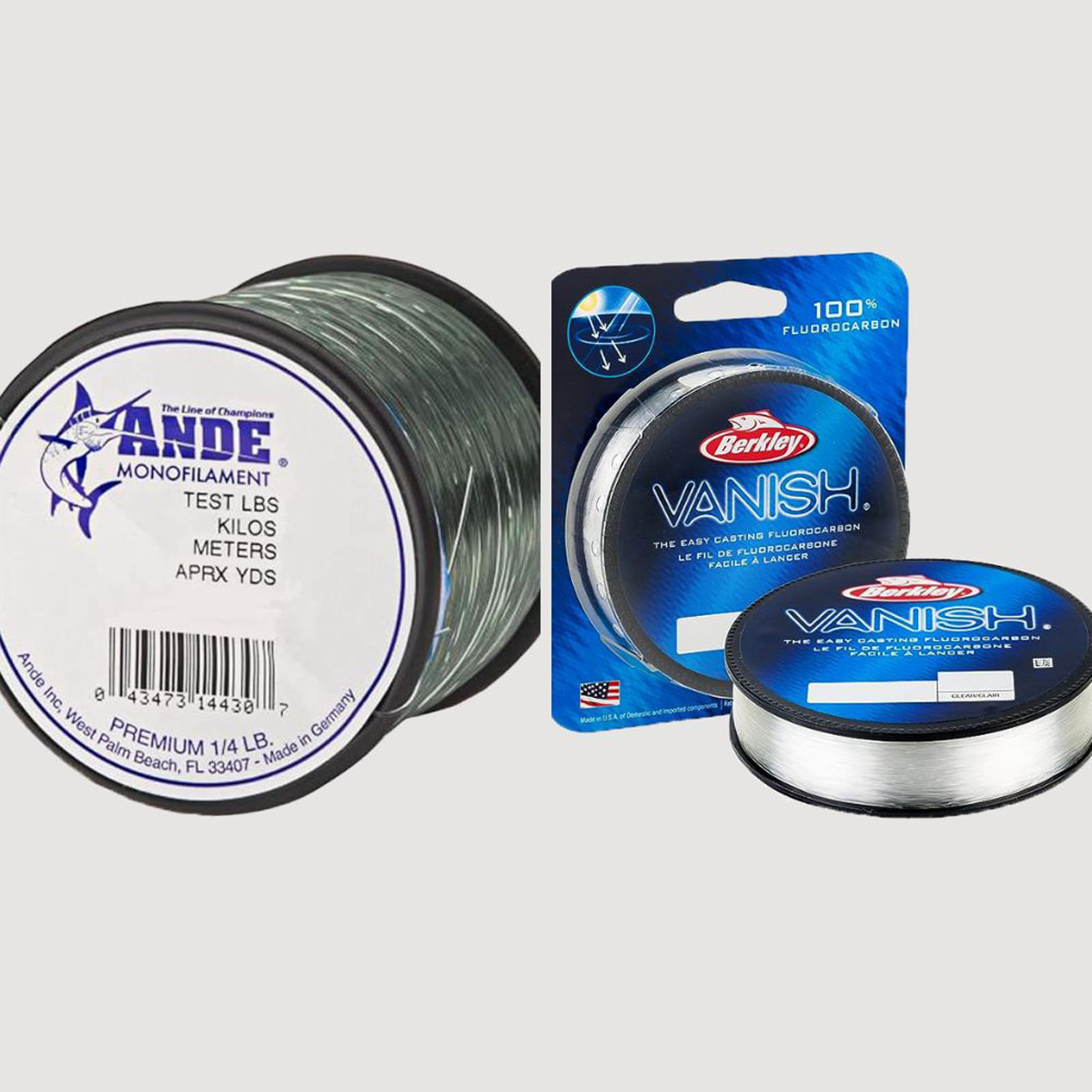
At your hook, I will tie a snell knot. A snell knot is very easy to tie and one of the strongest knots. You will need a long leader. I like to run 8-10ft 60lb Fluorocarbon depending on the water clarity or fishing pressure. Water Clarity is very important, adult mutton snapper have keen eyesight. If the water is green and has silt, I will run a shorter leader. If I am fishing in South Florida, where the water is very clear and the reefs get a ton of fishing pressure, I will run a 20-25ft 40lb Fluorocarbon leader. Once at your barrel swivel, I will tie an improved clinch knot. I will have my topshot tied to the other side of the swivel. I will have either a free sliding egg sinker or a weight clip holding a bank sinker. My topshot is a 60-80ft of 80lb-100lb monofilament leader. If you are curious about how Fluorocarbon and Monofilament work, check out my other post, Fluorocarbon vs. Monofilament Line. I have my monofilament line leading to my main line, which is braid, connected with an FG knot. My main line is I have roughly 300 yards of 80lb Braid.

Rod and Reel:
There are a few different types of reels that I recommend. The reel that I have is Speedmaster 16. This reel has two speeds and a lever drag. One speed is high gear, which means that you can take up more line, but it is harder to reel. The other speed is low gear. Low gear is easier to reel but picks up less line. A lever drag is on the side closest to the handle, and the angler controls how much drag to put on the fish with a lever. Depending on the size of the fish, I will use both speeds and the lever while fighting the fish. If you want a simpler reel. I would recommend a reel that has a star drag system. A star drag is usually a one-speed and the drag is adjusted with a starlike washer, like most baitcasters. My favorite star drag is a Diawa Saltist. Another popular choice is the Torium. I like to have a heavy rod; these larger fish are strong and will attempt to break you off on the bottom. I use an 8ft Aerial Starrod. Shimano rods are another popular choice. All that is left is finding the correct bait.
Bait:
Everyone is going to have a different opinion on what bait is the best. In my area, I have used natural baits such as live bait, dead bait, and cut bait. The best bait, in my opinion, is live baits such as Menhaden, Goggle Eyes, Cigar Minnows, Mullet, and Threadfin. The only downside to using live baits it can sometimes attract Red Snapper, Amberjack, and various game fish. If live bait is not available, grunt plugs or live grunts are a great option. I have also seen them caught on lures such as slow pitch jigs. Juvenile Mutton Snapper can be caught using swimbaits and other shrimp imitations. If you want to learn more about picking out the best baits, check out my post, Best Bait for Offshore Fishing.
Fighting Fish:
Out of all the snappers I have caught, Red Snapper fight the hardest, then Mutton Snapper. When Muttons bite your bait, they run hard into structure or out towards the sand. Once off the bottom, mutton snapper will dart up; they will dig and take drag, then be dead weight. When I first hook the fish, I am in full drag. Muttons will often break you off in structure. Once I believe that the snapper is off the bottom, I will back off the drag. Allowing the snapper to take drag when they need to. The last thing I want is the hook to rip out of the snapper’s mouth. If there are sharks around, I try to get the fish to the surface as fast as possible.
Closing Statements:
It took me a while to catch my first Mutton Snapper. Catching them takes patience and experience. If you do not have a boat, go on a headboat or hire a fishing guide in your area. If you have a buddy who has a boat, try these techniques. Always follow your state’s bag limit. Tag me in your fish pictures on Instagram @tylersfishingadventures.