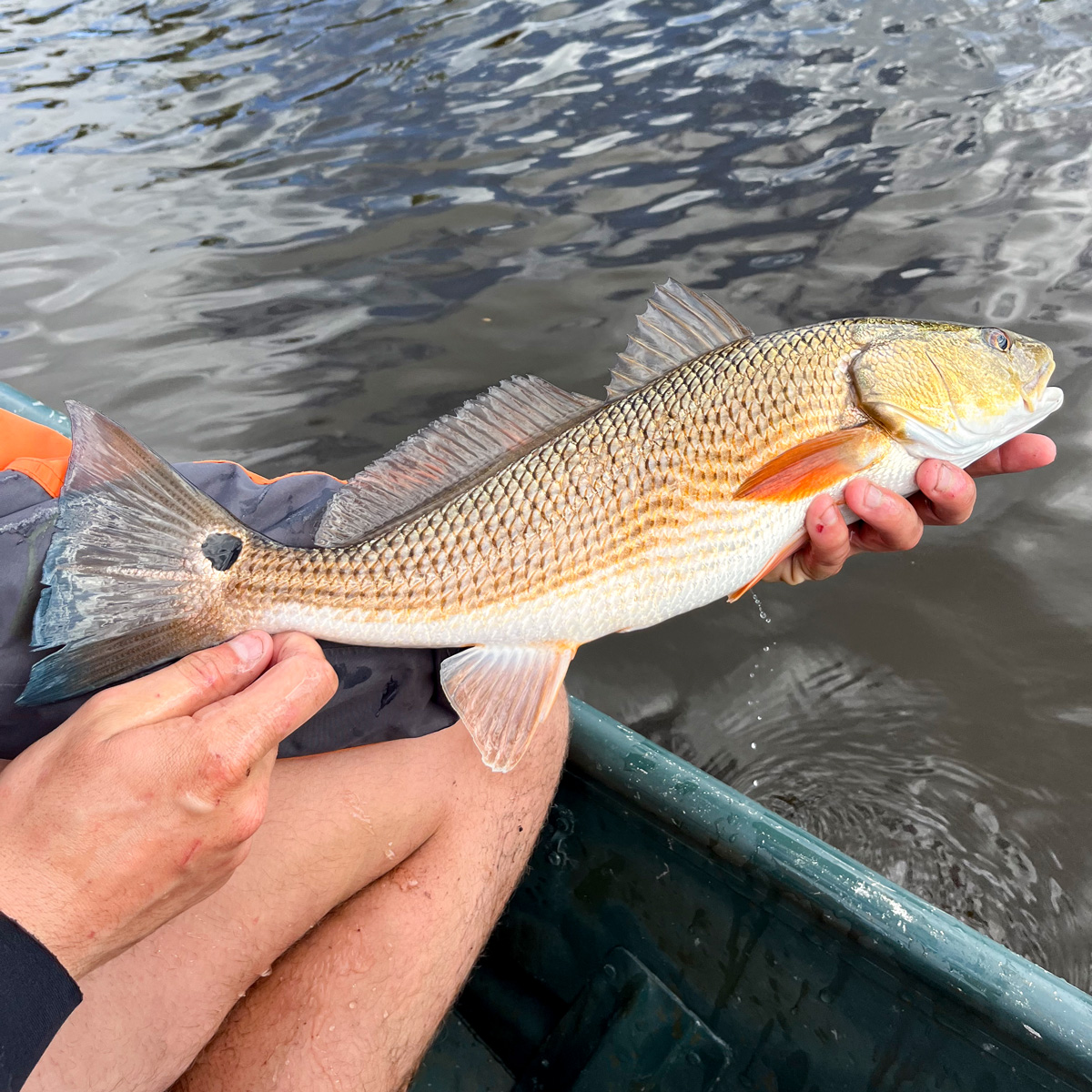
In this post, I am going to go into a deep dive about how to catch Speckled Sea Trout. Speckled Trout is a targeted species among many anglers. Speckled Sea Trout range from Florida all the way to Massachusetts. Sea Trout are a voracious predator; they can be relatively easy to catch and delicious table fare. Many anglers target this species in many different ways. In this post, I am going to go over the best ways to catch this inshore gamefish.
What is a Speckled Trout?

- Scientific name: Cynoscion nebulosus
- Family: Sciaenidae (drum family), they are related to Red fish and Black Drum.
- Common names: Spotted sea trout, speckled trout, speck, seatrout, snaggletooth
- Color: Silvery body with distinct black spots on the back, dorsal fin, and tail. Some fish have more spots than others.
- Size: Typically 1–5 pounds, but can reach over 10 pounds (trophy size). Any fish that is over 30 inches is considered a Gator Trout. The Florida State Record is 17.7lbs
- Teeth: Two prominent canine teeth in the upper jaw. They use these two front teeth to grab onto prey. Their mouth will be yellow in color.
Time of Year
From April to September, Speckled Sea Trout spawn, which is the best time to target these big sea trout. The bigger trout are aggressive during the spawning season. In the summertime, trout cruise the flats and creeks searching for food and will be spread out. With warm water temperatures, these fish will have to eat more, so they often travel long distances to get prey. As the water temperatures begin to cool down, trout congregate on drop-offs, holes, creek mouths, and other deep water areas. When the water temperature drops, trout will be less aggressive and lethargic, so subtle baits work better in the wintertime.
Habitat
Trout fishing can be as complicated as you want it to be. Speckled Sea Trout can be found in any estuarine system, flat, and rivers that contain salt and brackish waters. I have caught them in deep and shallow water. Most of the time, these fish will be oriented around some structure such as oyster beds, docks, drop-offs, rock piles, mangroves, or seagrass. Speckled Trout often hang out in schools or will inhabit a general area.
When fishing a new area, I like to use a search bait, something that I can cast a long way and can cover a lot of water. When looking at an aerial map, I will pick a rocky shore, oyster beds, current breaks, and grass lines. Trout are very aggressive towards topwater lures. If you don’t know where to start in the morning, just try any structure near the shore. The best places usually have some current flow.
Most artificial lures are great for this. In the early morning before the sun comes up, I like to throw a topwater. On days that the water is choppy, my go-to is a chug bug; the sound brings a lot of action and entices bites. When the water is calm, an excellent choice is the Yozuri Pencil Popper. I will usually switch to another presentation once the sun is up in the sky.
In the morning or evening, if you happen to see a dock that has a green or white light shining into the water, that is a great place to start. After sunset, I have always found trout on these lights. It brings smaller bait fish to the light to feed on plankton, which brings in the trout and predatory fish. But if you find a dock light, there is a good chance there are going to be some trout on it.
Fishing for trout on shallow grass flats is very exciting. Water depth will vary depending on where you are in the Southeast. When fishing grass flats, I like to look for deep holes or sand spots in the grass. In the morning hours, I still like to throw topwater lures. Covering water is vital for fishing for trout on the flats. Speckled Trout school up on flats. When you catch a fish, throw out an anchor and fish that area, you will probably catch others.
In the winter, on the seagrass beds, trout will sit in deep holes or at least along the edge of a drop-off or a channel. Good areas to check channel edges, sand potholes, and depth changes in or around grass flats.

Set Up
When it comes to speckled trout fishing, I use a medium to medium-light rod with a fast tip. There are many different rods on the market. I use a Toadfish Medium XF. The best rod that I recommend is Starrods; they make the best rods and usually come with a great warranty. The two that I recommend are the Stellar Lite and Aerial. Trout have soft mouths, and many times you can rip the lure out of their mouth.
For the reel, any inshore reel would work. I personally use a Stradic 2500. I believe they are the best reels on the market. Some other great reels are Diawa BG and Shimano Sedona. If you are looking for a cheaper reel, I recommend a Diawa Exceler or Penn Pursuit IV. I like to use 15lb Braid line, with a 15-20lb Fluorcarbon leader. My leader length depends on the water clarity and structure. If I am fishing in clear water, I like to use a longer leader.
Baits

There are a ton of different lures and ways to catch Sea Trout, and it depends on where you are fishing. In northeast Florida, the fishing is based on oyster bars, rock piles, and docks. Fishing on the flats, such as in North Carolina, Texas, or the Gulf of Mexico. A great choice is using a jig head and soft plastics; many different soft plastics work. Every area is different. If there are pinfish in the area, I do not like to use Gulp or Voodoo Shrimp. Pinfish and Pufferfish love to take chunks out of your Gulp and scented soft plastics.
Saltwater Assassin makes great soft plastics. I prefer paddle tails; they go through grass better and can be very versatile. They have many different colors. You can fish them in deeper water, shallow bays, grass flats, and various structures.
When fishing shallow grass flats, I like to have three rods set up. My first lure of choice would be a live shrimp under a popping cork. Live Shrimp is fantastic bait when finding speckled trout. They cannot resist it. The only downside is that pinfish and pufferfish think the same. If live shrimp is not an option, I will use artificial baits such as paddle tails or Gulp Jerk shads. Long casts with the popping cork can help locate the fish. When fishing grass flats make sure that your shrimp does not get caught in the grass.
My popping cork of choice is a four-horsemen. They are durable and can cast a long way. I use a 15-20lb Fluorocarbon leader to a jighead. I rig my shrimp through the head.
My next setup would be a 3-inch Gulp shrimp on a ¼ ounce jig head. My favorite color is New Penny. If the pinfish and pufferfish are bad, which is the summer months. I would use a Saltwater Assassin on a ¼ jighead. This setup helps when you find a school of trout and can take repetitive casts to the area. Using this setup, it is likely you’ll catch redfish, flounder, and possibly black drum.
My last setup will be a mirror lure. These are the best artificial hard baits when imitating a baitfish on the flats. They suspend in the water column and usually do not get hung in the grass, and are great for getting a reaction strike. I do recommend changing the hooks; sometimes the lures will bend out easily.
Fishing shallow grass flats is a great way to catch Speckled Trout. Having a boat or kayak is a great way, just let the current or wind push your boat and cover water. Wade fishing is another popular way. If you plan on wade fishing, I definitely recommend a backpack or a bag to keep all your gear dry. I recommend this chest pack.
If I plan to fish oyster bars and various rock piles, I change up my strategy. I use a ¼ ounce jig head and live bait. I have caught speckled trout on finger mullet, small croakers, and live shrimp. Live bait is great for all inshore species, so it’s definitely possible that you will catch a multitude of species. When rigging live shrimp, hook them through the tail and bounce them along the bottom. When using finger mullet, hook them through the lip, starting from the bottom. The bigger the mullet, the bigger the jighead needed. Using mullet, sometimes it takes the trout a couple of seconds to get the mullet entirely in its mouth.
Docklight fishing during a moving current can be a blast. Match the hatch when fishing dock lights. The great thing about fishing docks is that you will see what the speckled trout are feeding on almost immediately. Sometimes you will not see the trout, but shadows darting through the light. They can be anything from ladyfish, redfish, trout, snook, and mangrove snapper. The best time to fish it is during a moving current. Depending on the fishing pressure, some dock lights are easier to work than others.
In a fast-moving current, fish become more aggressive. Fish strike the lure out of reaction. The mirror lure is a great option, or X-wraps are another good choice. For a more natural presentation, I have thrown DOA Shrimp and or a voodoo shrimp. If the fish get spooked or lose interest. I will move to another light or will go to a live shrimp free-lined into the light. I have not tried the popping cork method on dock lights, so I cannot speak on that.
The Fight
I almost always know when I hook a sea trout. When fishing surface plugs, trout usually hit the topwater on the pause, never creating a large wake behind the topwater. Redfish create a large wake, or they will continuously follow your plug; that is how you can tell the difference. After you hook the trout and it immediately comes to the surface and jumps or just tries to throw the hook, this is usually going to be your smaller trout, less than 18 inches.
Now, when you hook a trout and it stays down, not coming to the surface, and they’re digging, those are usually your bigger trout. Bigger trout will make runs and pull drag equivalent to a Red fish. I handle these large fish with great care due to their age. A 14-18 inch Sea Trout is about 2-3 years in age; these are going to be your male fish. The larger fish over 20+ inches are females. A 24-inch Sea Trout is roughly 5-7 years old. I usually release trout over 20 inches. `
Processing

Speckled Sea Trout are a great fish to target due to their aggressive bite and delicious table fare. If you decide to keep them, I’ll put them on ice. Trout are easy to clean and skin. The best knife that I have used is the Dexter 8-inch. Speckled Trout does not freeze well, so I like to cook them as soon as possible. If you are looking for a recipe, check out my “Blackened Fish Recipe“. If you are looking for a place to fish, check out Google Earth, and you can find places to access water in your area. New to fishing in general, try some of these techniques and lures to help you catch some speckled trout. If you need further guidance, take a fishing charter and get more hands-on experience. If you are looking for ways to catch other species of fish, make sure you check out my other posts. Make sure that you follow your state rules and regulations.